摘要
本文在大量文献调研基础上,从油页岩概念和分类入手,详细总结了中国陆相油页岩分布规律、典型含油页岩盆地主要特征,从有机质来源角度探讨了陆相油页岩的富集机理和主要进展。研究表明:全球油页岩分布极不均匀,中国油页岩主要分布在27个省(自治区)、50个盆地共95个矿区,其中松辽、鄂尔多斯和准噶尔盆地蕴含资源量最多,形成时代主要为中生代,其次为新生代。根据盆地形成的演化过程与板块构造运动的关系,将中国含油页岩盆地概括为4类,不同的含油页岩盆地在有机质来源、有机质类型等方面具有明显的差异,其中离散型大陆裂谷盆地裂谷后热沉降拗陷阶段和板内型克拉通盆地易于形成特大型油页岩矿床。油页岩有机质主要来源于湖泊的自身生产和陆源生物碎屑两种,中国油页岩主要以湖相为主,有机质主要来源于藻类。不同类型油页岩有机质来源不同,其主要取决于有机质中藻类和陆源生物碎屑的比例。油页岩富集的有利条件是高湖泊生产力、微生物繁盛和藻类勃发及稳定的水体分层,缺氧的还原环境、较高的古盐度和适中的沉积速率是影响油页岩保存的重要因素。未来需要从多学科交叉的角度出发,探讨某一地质事件与油页岩形成的耦合关系,揭示油页岩与煤共伴生条件的转换机理,从而进一步推动中国油页岩成矿理论的完善和发展。
Abstract
This paper begins with the conceptual framework and classification of oil shale, systematically summarizes the distribution patterns of continental oil shale in China and the primary characteristics of typical oil shale-bearing basins, and explores the enrichment mechanisms of continental oil shale from the perspective of organic matter sources. Studies have shown that global oil shale distribution shows extreme heterogeneity, with China's resources primarily distributed across 95 mining areas in 27 provinces (autonomous regions), 50 basins. The Songliao, Ordos, and Junggar Basins contain the largest resource potential, predominantly formed during the Mesozoic era followed by the Cenozoic. Based on the relationship between basin evolution and plate tectonic movements, China's oil shale-bearing basins can be categorized into four types. Significant differences exist among basin types regarding organic matter sources and types, with post-rift thermal subsidence depression stages of divergent continental rift basins and intraplate cratonic basins being particularly favorable for the formation of super-large oil shale deposits. Organic matter originates from two sources: lacustrine autochthonous production and terrestrial bioclastic debris. China's oil shale deposits are predominantly of lacustrine origin, with algae serving as the primary source of organic matter. Variations in organic matter types are fundamentally determined by the relative proportions of algal biomass and terrestrial bioclastic components within the organic material. Favorable conditions for oil shale enrichment include high lacustrine productivity, thriving microbial activity, algal blooms, and stable water column stratification. Critical factors influencing oil shale preservation encompass anoxic reducing environments, elevated paleosalinity, and moderate sedimentation rates. Future research should adopt a multidisciplinary approach to explore the coupling relationship between specific geological events and oil shale formation, and to reveal the genetic mechanisms underlying the coal-oil shale association. This will further advance the refinement and development of oil shale mineralization theory in China.
0 引言
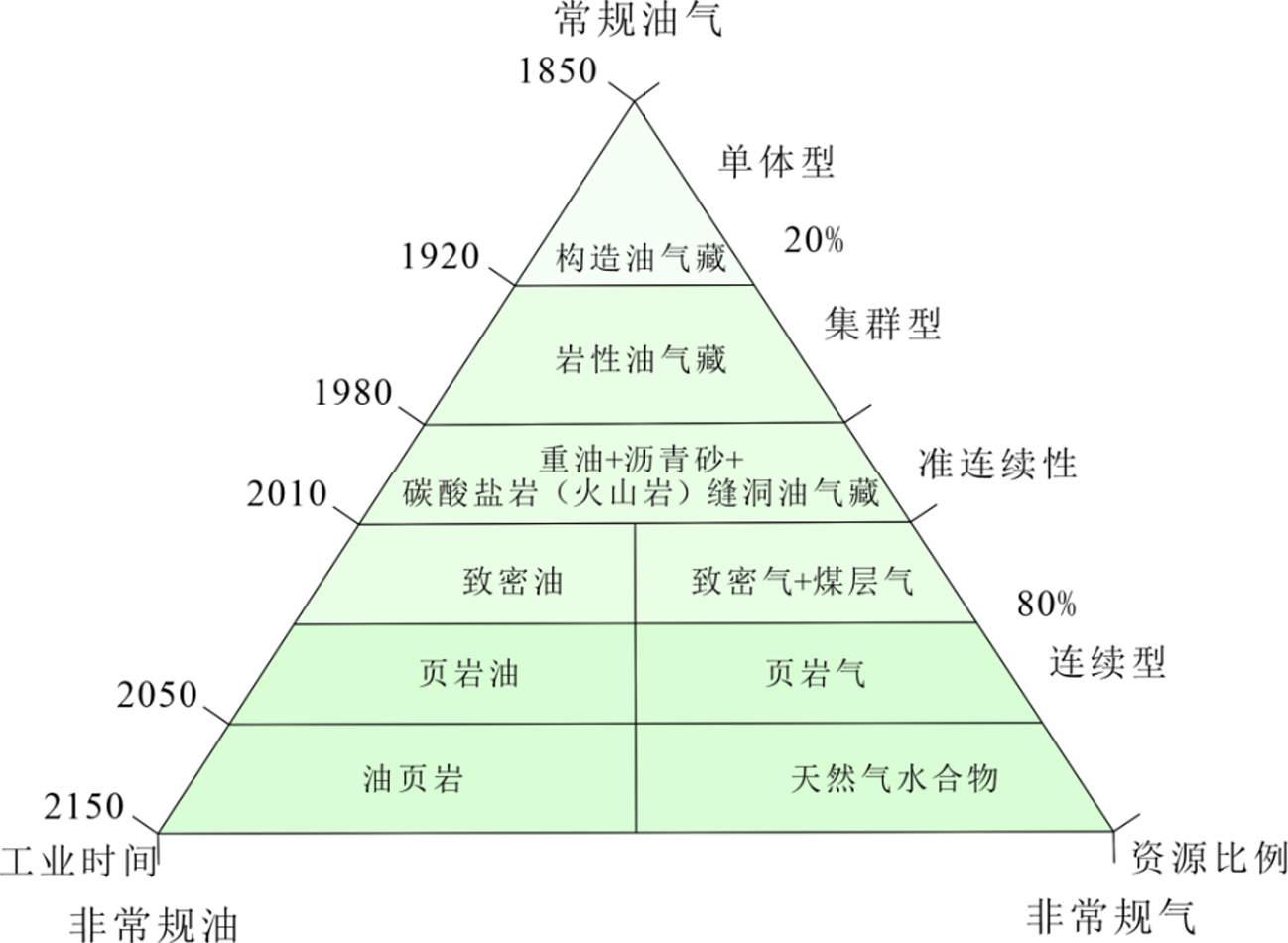
能源是人类生产、生活的物质基础。保障能源资源安全,是落实国家新一轮找矿突破战略行动的重要举措。由于传统能源如煤炭、石油等的开采已接近“瓶颈”,以页岩气、煤层气和油页岩等为代表的非常规能源日益引起国内外的关注(图1,Brendow,2003;Dyni,2003;刘招君等,2009a;邹才能等, 2015;肖明宏等,2024;王成等,2025),其中,油页岩因其资源丰富、埋藏浅、用途广泛、易于开采等特点,有望成为石油的重要补充或替代能源之一(刘招君等,2020)。油页岩跟页岩油的主要区别是油页岩属于一种可燃有机矿产,成熟度低,干酪根未生油或极少量油生成,需通过低温干馏才可以获得油页岩油;而页岩油则是赋存在页岩及其夹层中所含的石油资源。目前,全球油页岩资源丰富,但分布极不均匀,主要集中在美国、中国、俄罗斯、巴西等国家(Dyni,2003),其中美国油页岩储量约占世界总量的 69%,美国的绿河油页岩是世界上最大的油页岩矿床,总页岩油资源约2150亿 t,页岩最深可达 1200 m,平均含油率11.4%,分布面积65000 km2 (瓦尔特吕尔,1986;Ingersoll and Busby,1995;柳蓉和刘招君,2006;孙平昌,2013)。中国油页岩排在世界第二位(柳蓉和刘招君,2006;柳蓉等,2021),主要分布在松辽、依兰、鄂尔多斯、准噶尔、抚顺、茂名等 50个盆地(刘招君等,2009b,2020;计文化等,2022; 姜亭等,2022)。通过近十几年的理论研究和勘探开发,前人在油页岩分类、富集规律和成因等方面已取得了重要突破(Brendow,2003;Dyni,2003;柳蓉和刘招君,2006;刘招君等,2006,2009c,2020;计文化等,2022;杜家满等,2024),其中,吉林大学更是利用原位开采技术在松辽盆地成功采出了油页岩油(柳蓉等,2021)。但由于国内在油页岩方面起步较晚,很多理论尚未趋于成熟,一些认识还存在争议或不足,如油页岩属于有机质富集的沉积岩,其形成是否跟一些地质事件有关?不同沉积盆地中油页岩品质特征、有机质来源有什么差异?油页岩中有机质是如何富集和保存的?这些问题制约了油页岩理论创新和进一步勘探开发。为此,本文在大量文献调研基础上,系统总结了中国陆相油页岩分布规律、主要含油页岩盆地及其主要特征、油页岩有机质来源及富集机理,从而为进一步完善中国油页岩成矿理论提供一定参考。
1 油页岩概念及分类
1.1 油页岩概念
油页岩英文名为 Oil Shale,这一术语最早出现时间为19世纪中叶,主要与当时用于照明的油脂有关(Зеленин and Oзеров,1983)。早在1924年,油页岩就被认为是一种致密的沉积岩,其灰分大于 33%、加热时能够产出油页岩油(Gavin,1924)。 Кузнецов(1975)通过研究发现油页岩为一种富有机质腐泥岩,可作为工业燃料使用。Tissot and Welte(1984)认为只要热解生成的油页岩油具有一定利用价值,在当前条件下能够达到一定的商业标准的岩石,都可以认为是油页岩。1980 年,联合国将其定义为一种沉积岩,在其矿物结构中包含一种固体有机物,以油母质为主,不易溶解于石油溶剂;将其加热到 500℃(低温干馏),可以得到页岩油 (Smith,1980)。Dyni(2003)将其归为一种包含大量有机物,通过粉碎、蒸馏等工艺能够提炼出大量石油和可燃气的细粒沉积岩。显然,油页岩属于沉积岩范畴已得到国外科学家的共识。
在中国,油页岩又称为油母页岩,是一种可燃有机矿产。赵隆业等(1990)在系统总结国外分类的基础上,认为油页岩是一种固体可燃沉积岩,富含腐泥质、腐殖-腐泥质或腐泥-腐殖质,有机质含量一般介于 10%~60%;之后又从工业利用角度提出了油页岩概念,要求含油率必须在 5.0% 以上、发热量在7.50 MJ/kg以上,有机质类型可以是腐泥型、腐植型,也可以是两者混合成因(赵隆业等,1991a)。此外,该定义还对煤、炭质页岩与油页岩的界限进行了区分,认为油页岩与煤相比灰分超过 40%,与炭质页岩相比含油率大于5.0%(赵隆业等,1991a)。钱家麟等(2006)认为油页岩主要由矿物质和有机质组成,有机质中含有较高的氢,经低温热解可得到与原油相近的碳氢比,属于高灰分(40%~80%) 的腐泥煤,含油率为 3.5%~15.0%。刘招君和柳蓉 (2005)对油页岩的概念重新进行了梳理,认为其是一种灰分大于40%、含油率超过3.5%的固体可燃有机矿产,低温干馏可获得油页岩油,主要为腐泥型和混合型成因,发热量一般不小于 4.18 MJ/kg。这种定义普遍得到大家的认可并一直沿用至今。
与国外对油页岩的定义相比,中国对油页岩的定义主要偏向于具体的量化指标,如更加明确了含油率、灰分达到多少或处于什么范围之内才算是油页岩,而国外更侧重于油页岩的工业利用方面,对其具体含油率的多少相对关注较少。此外,不管是国外还是国内,油页岩属于细粒沉积岩,通过低温干馏可以获得页岩油(油页岩油)的认识已取得共识。
1.2 油页岩分类
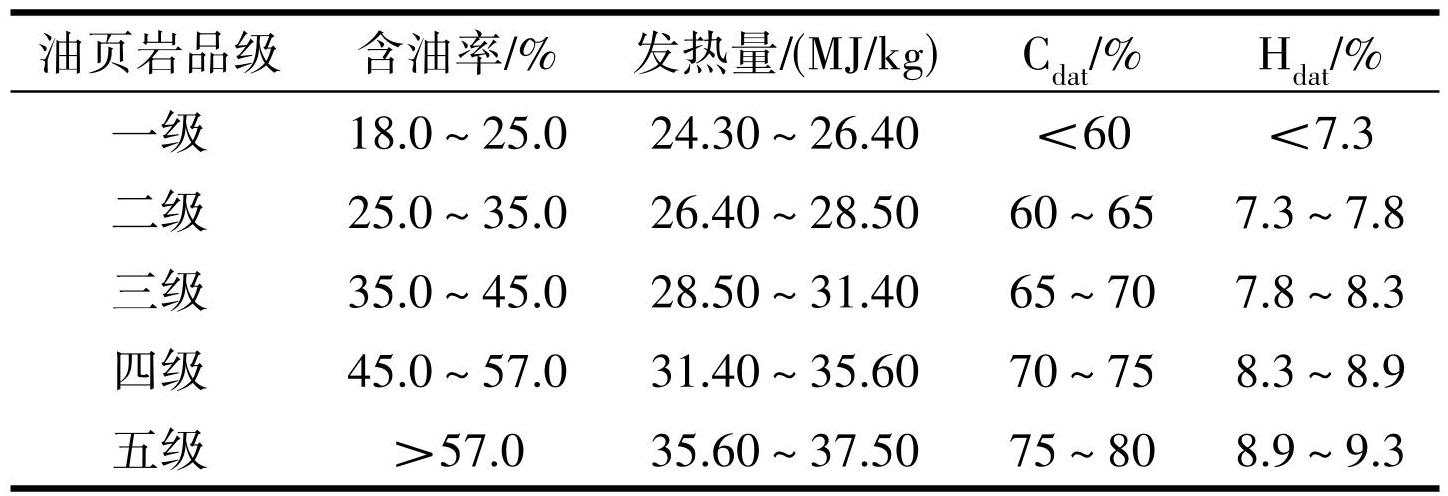
目前,对油页岩的分类主要有两大类:工业分类和成因分类(刘招君等,2016a)。其中,工业分类主要偏向于油页岩开发及综合利用方面,如 Добрянский(1974)利用含油率、发热量及C、H元素 4个参数,将油页岩品级划分为一到五 5个等级(表1)。这种分类方法缺点比较明显,取值较高,如一级油页岩含油率最低为 18%,此外缺少灰分指标,很难与煤相区别,如二到五级实则为煤。 Черемовский(1988)利用含油率、灰分、发热量 3 个指标,并结合 TOC 含量,对油页岩类型进行了系统划分(表2),并提出不同类型油页岩的有机质来源不同。由于该方案主要是针对苏联油页岩矿床,且方案中含油率取值普遍较高,不具有普遍性。赵隆业等(1991a,1991b)将中国油页岩划分为高品质、中品质和低品质油页岩3个级别(表2),主要划分依据为含油率,并利用灰分大小将油页岩划分为2类:高灰分(66%~83%)油页岩和低灰分(<65%)油页岩。这种分类方案相比于前两种方案,更适合于中国油页岩的类型划分,但低品质油页岩的发热量取值偏小,最大值只有 2.90 MJ/kg。吉林大学团队在系统评价中国油页岩的基础上,并参考前人分类方法,利用含油率将中国油页岩也划分为3类:含油率大于 10.0% 的高品质油页岩、含油率介于 5.0%~10.0% 的中等品质油页岩和含油率介于 3.5%~5.0%的低品质油页岩(刘招君等,2009b,2009c);研究还发现油页岩含油率与挥发分、发热量、热裂解烃(S2)及总有机碳含量(TOC)等参数之间具有显著的正相关关系,而与灰分、密度等参数表现为负相关关系(李宝毅等,2012;Sun et al.,2013),但这些参数之间的具体关系受沉积环境的影响较大,而沉积环境又影响油页岩有机质类型和成熟度。
由此可见,含油率、灰分及发热量3个参数是划分油页岩工业分类的关键,特别是含油率,是影响油页岩品质的最重要参数。根据目前国内比较认可的油页岩概念可知,油页岩概念的界定主要也是这 3 个参数,而且油页岩含油率的高低直接关系到油页岩中油页岩油的含量多少,发热量的高低是决定油页岩是否作为工业燃料的重要参数,灰分是区分煤与油页岩的关键指标,又是衡量油页岩品质的重要参数。因此,这 3 个参数基本决定了油页岩开发利用的价值和方向。至于不同分类方案在划分过程中的取值和参考的其他参数,主要与当时油页岩的开发工艺水平和具体的利用方向可能有关 (Добрянский,1974;Черемовский,1988)。
油页岩成因分类国外利用参数主要是有机显微组分,同时结合油页岩富集环境及其发育的构造背景,如 Зеленин and Озеров(1983)( 表3)、 Гинэбург(1986)在系统研究苏联油页岩矿床的基础上,利用有机显微组分将苏联油页岩划分为3类,同时给出了不同成因类型对应的主要工业利用方向。该方案综合考虑了油页岩含油率、发热量、有机显微组分、矿物含量、全硫含量等指标,为一套以成因分类为主并兼具工业分类的综合分类方案,相对比较系统和全面。赵隆业等(1990)进一步利用有机显微组分(主要为藻类、树脂体、孢子体等)所占的具体比例,将油页岩划分了9个亚类:结构藻类体、胶质藻类体、腐泥质、含藻类体混合型、含藻类体树皮体混合型、含藻类体角质体小孢子体混合型、含藻类体树脂体混合型、浊煤型和腐植残值型; 刘招君等(2016a)认为该分类方案具有一定缺陷,方案中的腐植残值型是灰分小于 40% 的煤类(含油煤),因其焦油产率较高,被误认为是油页岩。因此,在系统总结国内外油页岩成因分类的基础上,刘招君等(2016a)提出了目前国内认可度较高的一套分类方案,该方案认为有机显微组分是划分油页岩成因类型的最主要指标,但其受控于沉积环境的影响,因此沉积环境也是划分油页岩成因类型的重要参考,据此将中国陆相湖盆油页岩划分为3类(表4):(1)半深湖腐植腐泥型,有机质主要为角质体、树脂体、孢子体和藻类体;(2)深湖腐泥型,有机质主要为各种类型结构的藻类体;(3)湖沼腐泥腐植型,有机质主要为树皮体、木栓体和镜质体。该方案最大的优点在于从沉积环境角度划分了中国陆相油页岩成因类型,沉积环境是决定有机质来源的关键因素,不同的沉积环境中油页岩有机质来源、有机质类型具有明显的差异。
表1油页岩按化学性质分类(数据据Добрянский,1974)
2 中国陆相油页岩分布规律及主要特征
2.1 油页岩分布规律
中国油页岩主要分布在27个省(自治区)、50个盆地共 95 个矿区(刘招君等,2020;柳蓉等,2021),盆地以松辽、鄂尔多斯和准噶尔盆地蕴含资源最多,约占中国油页岩总资源量的 50% 以上(图2)。形成时代以中生代为主,其次为新生代,古生代也有少量分布,其中中部和东部地区以中生代和新生代油页岩矿床为主,西部地区主要为古生代油页岩矿床,总体显示出从西北向东南方向逐渐变新的特点(刘招君等,2020;柳蓉等,2021)。油页岩沉积环境有陆相湖泊、海相及海陆交互相,但以陆相淡水湖和半咸水湖为主(刘招君和柳蓉,2005)。刘招君等(2020)根据盆地形成的演化过程与板块构造运动的关系,并参考 Ingersoll and Busby(1995)的沉积盆地分类法,将中国陆相含油页岩盆地概括为离散型大陆裂谷含油页岩盆地、汇聚型前陆含油页岩盆地、板内型克拉通含油页岩盆地和转换型走滑含油页岩盆地 4 种类型;不同类型的含油页岩盆地在油页岩分布、沉积岩石组合及有机质类型等方面,具有明显的差异(表5)(柳蓉,2007;柳蓉等,2008,2012a,2021b;刘招君等,2012,2016a,2016b,2020; Sun et al.,2015)。
表2较为系统的油页岩工业分类

表3油页岩按工业-成因性质分类(据Зеленин and Озеров,1983修改)


2.2 含油页岩盆地及油页岩主要特征
(1)离散型大陆裂谷含油页岩盆地
该类盆地主要形成于大陆裂谷后热沉降拗陷阶段或同裂谷沉降阶段,主要分布在中国的沿海及大陆内部等地区,总体呈NE或NNE向展布(刘招君等,2020)。形成于裂谷后热沉降拗陷阶段的含油页岩盆地代表性盆地主要为松辽盆地,该盆地为一中生代大型拗陷盆地。盆地内油页岩资源丰富,油页岩主要形成于半深湖—深湖环境,赋存层位有嫩江组和青山口组两套地层,有机质类型以Ⅰ型为主,Ⅱ1 型次之,嫩江组二段油页岩平均含油率5.0 %,油页岩最大累计厚度 39 m,分布面积 90332 km2(表5),总体属厚度中等、含油率中等的油页岩,油页岩分布面积较大(Feng et al.,2009,2010),主要形成于水进及高水位体系域;该类盆地易于形成特大型油页岩矿床,如松辽盆地油页岩资源为 8297 亿 t(刘招君等,2020)。

形成于同裂谷沉降阶段的含油页岩盆地,代表性盆地主要有柴达木盆地、朝阳盆地和建昌盆地等,主要为规模相对中等的断陷盆地;该类盆地中油页岩主要形成于湖相和沼泽环境,有机质类型主要为Ⅱ1-Ⅱ2型,总体属含油率中等、厚度中等的油页岩,油页岩分布面积较小,如柴达木盆地油页岩平均含油率 9.7%,最大累计厚度 21 m;朝阳盆地油页岩平均含油率 4.7%,最大累计厚度 100 m(表5); 该类盆地易于形成中型油页岩矿床,如朝阳盆地油页岩资源 73亿 t,柴达木盆地油页岩 48亿 t(刘招君等,2020)。
(2)汇聚型前陆含油页岩盆地
该类盆地大部分发育在中国西部地区,代表性盆地有羌塘盆地和准噶尔盆地。强烈的构造运动为羌北侏罗纪前陆盆地的沉积演化创造了条件(陈书平等,2001),南、北天山洋盆关闭,早二叠世时塔里木地块和准噶尔地块连接到一起形成了准噶尔前陆盆地(李勇等,2002;张峰等,2010)。总体上,羌塘盆地和准噶尔盆地油页岩主要形成于前陆盆地陆相磨拉石沉积阶段。准噶尔盆地博格达山北麓地区的油页岩有机质类型主要为Ⅰ型和Ⅱ1型,主要赋存在二叠系芦草沟组,平均含油率 7.4%,总体属高含油率油页岩。准噶尔盆地南部博格达山油页岩主要形成于半深湖—深湖环境,主要赋存地层也为二叠系芦草沟组,为盆地拗陷期沉积。但该地区油页岩面积较小,分布面积 162 km2,主要分布于博格达山北麓妖魔山背斜的南翼一带。该地区油页岩平均含油率 7.4%,最大累计厚度 205 m(表5),矿层倾角变化较大,一般为 60°~70°,油页岩资源 552 亿 t,为一大型油页岩矿床(刘招君等,2020)。总体上,该类盆地油页岩有机质类型以Ⅰ型和Ⅱ1型为主,具有较高含油率、厚度大,但分布相对局限、矿层产状变化较大的特点;该类盆地中易于形成大型油页岩矿床。
表5中国含油页岩盆地类型及油页岩(矿床)主要特征

(3)板内型克拉通含油页岩盆地
该类盆地主要分布在中国的中部地区,代表性盆地有鄂尔多斯盆地和四川盆地。这两个盆地是中国东部近南北向构造分异向近东西向构造分异转换期和转换后的构造产物,引起这一体制转换的驱动力主要来自伊泽奈岐板块向古亚洲大陆的俯冲(任纪舜等,2005)。其中油页岩主要形成于地台和内陆沉积阶段。鄂尔多斯盆地油页岩主要赋存地层为三叠系延长组,主要形成于陆内拗陷阶段,有机质类型Ⅰ型和Ⅱ1型均有分布,但主要为Ⅱ1型,平均含油率 7.4%,总体属中—偏高品质油页岩;沉积环境主要为半深湖—深湖,油页岩厚度较稳定,最大累计厚度 32 m,分布面积 7567 km2,油页岩资源 3345 亿 t(表5),属一特大型油页岩矿床。总体上,该类盆地中油页岩有机质类型以Ⅱ1型为主,具有中—偏高含油率、厚度稳定、分布面积大的特征; 该类盆地中易于形成特大型油页岩矿床。
(4)转换型走滑含油页岩盆地
该类盆地主要分布在中国的东北地区,代表性盆地主要有桦甸盆地和抚顺盆地。这两个盆地均为郯庐断裂带向北延伸的产物,为新生代小型断陷含油页岩盆地,具有典型走滑性质(刘招君等, 2016a)。这类盆地中油页岩资源丰富,具有“小而肥”的典型特征。该类盆地中油页岩主要形成于伸展-走滑阶段,有机质类型以Ⅱ1-Ⅱ2型为主,但受差异性沉降作用的影响,油页岩含油率和厚度变化较大,如桦甸盆地沉降幅度较小,虽然具有丰富的有机质,油页岩含油率高(平均8.6%),但油页岩的厚度明显较薄,单层最厚只有 4 m(表5);而与之相邻的抚顺盆地沉降幅度较大,深湖相较发育,有机质丰富,油页岩含油率较高,平均5.9%,油页岩单层最厚可达190 m(刘招君等,2020)。总体上,该类盆地中油页岩分布面积较小,容易形成中小型油页岩矿床。
2.3 不同含油页岩盆地有机质类型差异性
由前可知,不同类型含油页岩盆地中油页岩有机质类型差异较大,如离散型大陆裂谷盆地裂谷后热沉降拗陷阶段形成的油页岩有机质类型主要为 Ⅰ型,而同裂谷沉降阶段的油页岩有机质类型主要为Ⅱ1-Ⅱ2;汇聚型前陆盆地和板内型克拉通盆地中油页岩有机质类型较相似,主要都为Ⅰ-Ⅱ1,转换型走滑盆地中油页岩有机质类型则为Ⅱ1-Ⅱ2或Ⅱ1(表5)。出现这种差异性的主要原因是不同的盆地成因类型和演化阶段形成的沉积环境不同,而不同的沉积环境中有机质来源不同,从而造成有机质类型的不同(表4)。离散型大陆裂谷盆地裂谷后热沉降拗陷阶段,盆地大规模沉降,形成广阔的深湖环境,油页岩的发育与湖盆的湖泛对应,盆地范围大,受陆源碎屑影响小,主要以湖泊自身生产力为主,形成的油页岩有机质类型则以Ⅰ型为主;而同裂谷沉降阶段的油页岩形成于同裂谷后沉降的断陷阶段,此时的沉积环境不仅有深湖环境,也有湖沼环境,有机质除了低等生物以外,也有部分陆源碎屑物的贡献,因此油页岩有机质类型表现为Ⅱ1-Ⅱ2。汇聚型前陆盆地中油页岩主要形成于陆相磨拉石阶段,在构造沉降大背景下,发育了半深湖—深湖环境,有机质来源低等生物占优势,油页岩有机质类型表现为Ⅰ-Ⅱ1;板内型克拉通盆地中油页岩主要形成于地台和内陆阶段,该时期稳定的大规模沉降形成了半深湖—深湖环境,而油页岩主要集中于深湖环境,受陆源碎屑物影响较小,有机质类型表现为Ⅰ-Ⅱ1。转换型走滑盆地中油页岩主要形成于伸展-走滑阶段,受走滑盆地边界构造的影响,盆地沉降幅度变化较大,当盆地沉降幅度较大时,深湖环境相对发育,有机质来源低等生物占优势,油页岩有机质类型表现为Ⅱ1;当沉降幅度较小时,发育半深湖—深湖环境,有一定比例的陆源碎屑物质输入,有机质类型则表现为Ⅱ1-Ⅱ2(刘招君等,2020)。此外,不同类型含油页岩盆地中油页岩有机质富集与保存条件也存在较大差异,也是造成油页岩有机质类型不同的主要原因。
3 中国陆相油页岩有机质来源与富集
前已述及,中国油页岩主要以陆相淡水湖和半咸水湖为主,油页岩主要形成于 4 类含油页岩盆地中,不同的含油页岩盆地有机质的来源和保存条件存在较大差异,主要与盆地形成的构造背景和演化阶段具有密切的关系,而不同的湖盆背景和演化阶段又发育了不同的沉积环境(刘招君等,2016a,2020)。因此,沉积环境是影响油页岩有机质来源和保存条件的直接因素,而湖盆背景和演化阶段为间接控制因素。
3.1 油页岩原始有机质来源
在湖泊水体及近岸流环境中,有机质除参与生物地球化学循环外,还有一少部分会进入沉积物中,经过自然硫化-黏土络合-生物降解缩聚-选择性保存等复杂的过程后形成稳定的沉积有机质,当这部分有机质达到一定的成熟度后,就会形成烃类资源(Calvert et al.,1992;Bertrand and Lallier,1993; Hedges and Keil,1995)。而烃类的生油生气潜力又受到多种因素的影响,如有机质来源、有机质丰度和有机质类型等,其中有机质来源又受控于沉积环境,不同的沉积体系、不同的沉积环境下有机质的来源不同(Claypool and Reed,1976;Marinelli et al., 1998;Dembick,2009)。
研究表明,油页岩一般形成于湖相、沼泽相、海相和海陆过渡相环境,中国油页岩主要形成于湖相 (柳蓉等,2021)。相比与海相沉积比较单一的有机质来源(主要为浮游生物),陆相湖盆有机质的来源更为复杂多样,如种子植物、蕨类和苔藓植物等产生的大量分泌物及凋谢物,在进入水体、土壤及沉积物后,在微生物的作用下形成木质、角质等,再经过凝胶化作用,进而形成无定型、壳质组、镜质组等腐植组显微组分(Teichmüller,1986;Bustin,1988; Snowdon,1991)。大量植物死亡后,在长期的机械粉碎和燃烧过程中,它们的茎杆、枝干部分会生成丝炭等惰质组分,这些惰质组分很难被降解,因而就可以大量保存下来(Hedges et al.,1997;Scott and Glasspool,2007)。除了陆源植物碎屑以外,湖泊内的水生生物、藻类及微生物的自身生产也能够提供丰富的有机质来源(王君贤,2021),从而造成陆相沉积有机质相对复杂的有机质来源。
由此可见,湖相油页岩有机质主要来源于陆源生物碎屑和湖泊内水生生物、藻类及微生物的自身生产两部分(图3,丁寒生,2014)。此外,不同类型有机质来源不同,其主要取决于有机质中藻类、微生物和陆源生物碎屑的比例,当有机质由藻类、微生物形成,有机质类型则为腐泥型,如松辽盆地嫩江组、准噶尔盆地芦草沟组和鄂尔多斯盆地延长组,高湖泊生产力、适中的沉积速率和有利的保存条件,容易富集形成高品质油页岩(图4a);当有机质中有陆源生物碎屑输入时,陆源碎屑物会降低湖泊自身生产力,即使半深湖环境具有较高的古湖泊生产力,这种情况就会形成混合型油页岩(陆源生物碎屑较少时为腐植腐泥型,相反则为腐泥腐植型),如桦甸盆地桦甸组、依兰盆地达连河组和朝阳盆地九佛堂组油页岩(图4b、c,刘招君等,2020)。

图3中国陆相油页岩湖泊有机质来源循环图

从盆地演化的角度来看,在大中型盆地的拗陷沉积阶段往往可以形成规模较大的深湖环境,而深湖环境中藻类、浮游生物较发育,陆源碎屑物的影响极少,如松辽盆地有机质主要为水生生物,且以水生藻类占绝对优势(刘招君等,2012);而在大中型拗陷盆地的边缘及小型断陷湖盆阶段往往发育半深湖环境,虽然湖盆中水生生物较发育,但陆源生物碎屑也占有一定比例,从而造成水生生物比例的下降,如桦甸盆地油页岩主要形成于靠近控盆断裂一侧的半深湖环境,有机质除了藻类等水生生物以外,还有陆源碎屑物的供给。此外,像依兰、茂名等小型断陷湖盆,油页岩主要形成于盆地演化的初期或末期的湖沼环境,该类盆地中油页岩主要与煤共伴生,显示出有机质中陆源生物碎屑(高等植物) 占优势(刘招君等,2016a;王东东等,2016)。
3.2 古湖泊生产力
生产力是生物在单位面积、单位时间内产生有机质的能力,古湖泊生产力的高低直接关系到油页岩的形成和分布。前已述及,中国陆相油页岩多为湖相,有机质来源于藻类和少量陆源生物碎屑(刘传联和徐金鲤,2002;秦建中,2006;张林晔,2008),其中藻类的周期性勃发通常会促进高湖泊生产力的形成(孟庆涛等,2012;Zhang et al.,2017;Chen et al.,2020)。已有研究发现,油页岩中有机质的超常富集通常与高湖泊生产力具有密切的关系,而高初级生产力又受火山喷发、岩浆活动、水体对流、母岩性质、气候突变、大洋缺氧及碱性营养水体等因素的影响(Kelts,1988;冯子辉等,2009a,2009b;贾建忠等,2009)。这些因素可以不同程度影响古湖泊水体条件的变化,进而引发高湖泊生产力,为油页岩的形成创造有利条件。如火山喷发会导致水体中H2S含量剧增,以及极端气候变暖;海侵事件会带来大量海洋浮游生物,降雨量增加引起水平面上升,可以容纳更多有机质输入;岩浆活动引起的超级地幔柱导致缺氧事件,同时也可以带来大量营养物质进入湖泊或海洋(图5,侯读杰等,2003;陈代钊等,2011;柯友亮等,2019;柳蓉等,2021;王大兴等, 2024)。但如果这些因素或地质事件超过了一定界限,则不利于油页岩的富集,反而会破坏稳定的缺氧环境,如过量的火山灰、高温高压的间歇性热液流体等都可以破坏原有的生态系统,从而造成大量湖泊生物的死亡。
近年来,随着生物地球化学和生物标志化合物技术的快速发展,微生物对于古生产力的作用也逐渐受到重视,研究发现微生物(细菌、古菌及大部分真核生物)不仅是分解者,将有机物质进行分解,以供其他生物再利用,同时也是重要的生产者(Kolber et al.,2000;Baltar et al.,2010;Richardson and Jackson,2010)。现代海洋研究也发现,细菌能够通过化能合成作用,利用无机物质合成有机物,因此细菌也是初级生产力的重要组成部分(Hobbie and Mancke,1977;Fuhrman and Azam,1980)。Sachsenhofer and Koltun(2012)研究发现,在成熟度比较低 (未成熟或低成熟)的沉积有机质中低 OEP1 和高 OEP2值的正构烷烃的中长链C20-32,其最大的贡献为细菌和藻类微生物。柳蓉等(2021)发现中国的银额盆地下白垩统巴音戈壁组油页岩具有低OEP1、高 OEP2的特点,显示出细菌和藻类是有机质母质的主要来源,且细菌在油页岩中活动强度高于一般泥质岩。

3.3 有机质富集与保存
油页岩形成的必要条件是丰富的有机质来源,另一个重要因素是有机质的大量富集和良好的保存条件,其中缺氧的还原环境是最佳保存条件(柳蓉等,2021)。研究表明,在水体缺氧特别是硫化静水环境下,大量有机质可以通过硫酸盐还原分解产生,尽管分解的速率相对较低(与氧化分解的速率相差不大),但却能够导致大量有机碳的明显富集 (Canfield,1989;Moft et al.,2007)。此外,前已述及,油页岩中有机质来源于两部分:陆源生物碎屑和湖泊内水生生物、藻类及微生物的自身生产,当水体不稳定,属于比较动荡的环境时,有机质会容易发生降解而被带走,这种情况下不利于有机质的保存 (朱峰,2010)。
研究发现,水体的分层可以导致缺氧条件的形成,如围绕美国绿河油页岩 Wilkins Peak 段先后建立了不同的沉积模式:Surdam and Wolfbauer(1975) 的干盐湖复合体模式、Surdam and Wolfbauer(1973) 的干盐湖模式、Bradley and Eugster(1969①)的分层湖模式、Desborough(1978)的生物化学分层湖模式和Boyer(1982)的外因分层湖模式等,这些模式虽然都各不相同,但都强调了有机质富集过程中水体分层的作用。徐进军等(2015)也发现中国东北的松辽盆地嫩江组和青山口组油页岩主要形成于强还原—还原的稳定的水体分层环境,多个地化参数都佐证了这一点,并且在富矿段还原环境中油页岩的 Ni/V 和 Ni/Co 比值均相对较稳定,变化幅度较小。至于水体发生分层的原因主要是由于湖水内部密度的变化,这种密度变化可以是由温度引起的热分层,也可以是盐度引起的化学分层(柳蓉等,2021; 张水昌等,2022a,2022b)。
此外,古盐度和沉积速率也是影响有机质保存的重要因素。在高盐度环境下,微生物的活性受到限制,从而减缓了有机质的生物降解过程,有机质可以大量保存下来;另一方面,高盐度环境可以造成水体发生化学分层,有效阻挡了氧气与微生物的侵入,为有机质提供了一个相对封闭且稳定的保存环境(李得路,2018;郭战峰等,2024)。研究还表明,在高盐度水体中,有机质倾向于在湖泊底部沉积物中富集,因为底部环境相对较缺氧,有利于有机质的保存(李礼,2021)。前人在对比盐湖、咸水湖和淡水湖的研究中也发现,高盐度湖盆中的生产力条件明显高于一般的湖盆,适度的咸化水体为有机质的保存提供了良好的环境(Walker and Price, 1963;Chivas et al.,1985)。在一定条件下,沉积速率与有机碳的含量呈一定的负相关关系,沉积速率越大,有机质越容易被稀释(Tyson,2001;秦建中等, 2005)。但沉积速率不能太低,太低有机质易于被氧化破坏(孙平昌,2013)。不同学者指出优质烃源岩通常发育在较低沉积速率水体中,特别是在沉积速率低于1 cm/ka的深海水体中,有机质富集程度相对较高。对于陆相湖盆而言,沉积速率与水深呈反比,沉积水体越深,水体越稳定,对应的沉积速率越低,意味着低的陆源碎屑物供给,有利于有机质的富集和保存(赵文智等,2020;梁霄等,2022)。
综上可见,有机质来源和保存条件是形成油页岩的最关键控制因素,其中缺氧的还原环境是最佳保存条件,水体的分层可以导致缺氧条件的形成,此外较高的古盐度和适中的沉积速率也是影响油页岩有机质保存的重要因素。
4 结论与展望
油页岩是石油、天然气等常规能源的重要补充和替代能源之一,也是中国重要的战略性资源。世界油页岩分布极不均匀,其中美国油页岩储量约占世界总量的2/3,中国居第2位。中国油页岩主要分布在27个省(自治区)、50个盆地共95个矿区,其中松辽、鄂尔多斯和准噶尔盆地蕴含资源最多,油页岩形成时代以中生代为主,其次为新生代。根据盆地形成的演化过程与板块构造运动的关系,将中国含油页岩盆地概括为 4 类,不同的含油页岩盆地在有机质来源、有机质类型等方面具有明显的差异,其中主要与湖盆形成的构造背景和演化阶段具有密切的联系。原始有机质来源是油页岩形成的物质基础,主要有湖泊的自身生产和陆源生物碎屑两种来源。中国油页岩主要以陆相淡水湖和半咸水湖为主,有机质主要来源于藻类。不同类型油页岩有机质来源不同,其主要取决于有机质中藻类、微生物和陆源生物碎屑的比例。油页岩富集的有利条件是高湖泊生产力、微生物繁盛和藻类勃发及稳定的水体分层,缺氧的还原环境是最佳保存条件。此外,较高的古盐度和适中的沉积速率也是影响油页岩有机质保存的重要因素。
地球是一个复杂的生态系统,油页岩的形成受到多种地质因素的控制,而各个因素之间又有着不同程度的联系,一个地区有机质的大量富集代表着其中一个或多个地质因素的改变,而这种改变通常会引发许多不同的结果。因此,到底哪一个因素在油页岩的形成过程中起到了关键作用目前尚不清楚。此外,中国陆相油页岩大部分与煤共伴生,主要作为煤层顶板、底板或与煤互层出现。前人研究表明,煤与油页岩的发育一般都需要相对稳定的构造、温暖湿润的气候、较丰富的有机质供应、一定的水深和较少的陆源碎屑物质供应,且二者的物质来源均含有高等植物和低等植物(藻类);不同的是,煤的发育一般为浅覆水的沼泽环境,而油页岩发育的环境水深变化幅度较大,最主要的是湖水能够出现稳定的水体分层;其次,成煤物质以高等植物为主,而油页岩主要以低等植物主,如藻类等。因此,在一定条件下,煤与油页岩的发育条件可以进行转换,进而出现煤与油页岩共伴生的关系。那么具体在什么情况下,会出现煤与油页岩共生或伴生的现象,它们的临界点在什么位置,或者具体是什么因素导致了煤与油页岩的共伴生关系,目前相关研究较少。因此,未来还需要从多学科交叉的角度出发,去探索某一地质事件与油页岩形成的耦合关系,以及煤与油页岩共伴生条件的转换问题,从而丰富和发展中国油页岩成矿理论,促进油页岩的勘探开发。
注释
① Bradley W H, Eugster H P.1969. Geochemistry and palimnology of the trona deposits and associated auhigenic minerals of the Green River Formation of Wyoming[R]. Richmond: United States Geological Survey, 53.